Shaadi.ltd: Why South Asian Weddings Need Their Own Platform
A South Asian wedding is not a single date with a guest count. It is four to six functions, hundreds of guests, and dietary and cultural requirements no generic directory was built to hold. Shaadi.ltd is the platform that treats that complexity as the default, not the exception.
Open any of the big Western wedding platforms and try to plan a South Asian wedding. You will be asked for one date. One guest count. One venue. One budget. And within five minutes you will be fighting the software, because the thing you are planning is not one wedding — it is four to six distinct functions spread across days, each with its own guest list, its own menu, its own vendors, and its own seating geometry. That mismatch is exactly why shaadi.ltd exists.
The PremiseA South Asian wedding is not an event. It is a series of events.
The single most important fact about South Asian wedding planning is also the one that generic platforms get wrong from the first screen: there is no such thing as the wedding day. There is the Mehndi. The Sangeet. The Haldi. The Baraat. The Ceremony. The Reception. Some families add a Roka, a Tilak, a Mayian, a Walima. Each of these is a real event with real logistics — and the families planning them are routinely coordinating hundreds, sometimes more than eight hundred, guests across all of them.
That is not a heavier version of a Western wedding. It is a structurally different problem. And shaadi.ltd is built around that structure instead of apologising for it. Where a generic directory models a wedding as a single record — one date, one count, one location — shaadi.ltd treats every function as a first-class event with its own attached guest list, dietary requirements, vendor roster, seating plan, and run-of-show. The complexity is the default, not an exception you have to hack around.
The right question is: "how many functions are we planning, and who is coming to each one?"
Section vs. Platform
Why a "South Asian section" was never going to be enough.
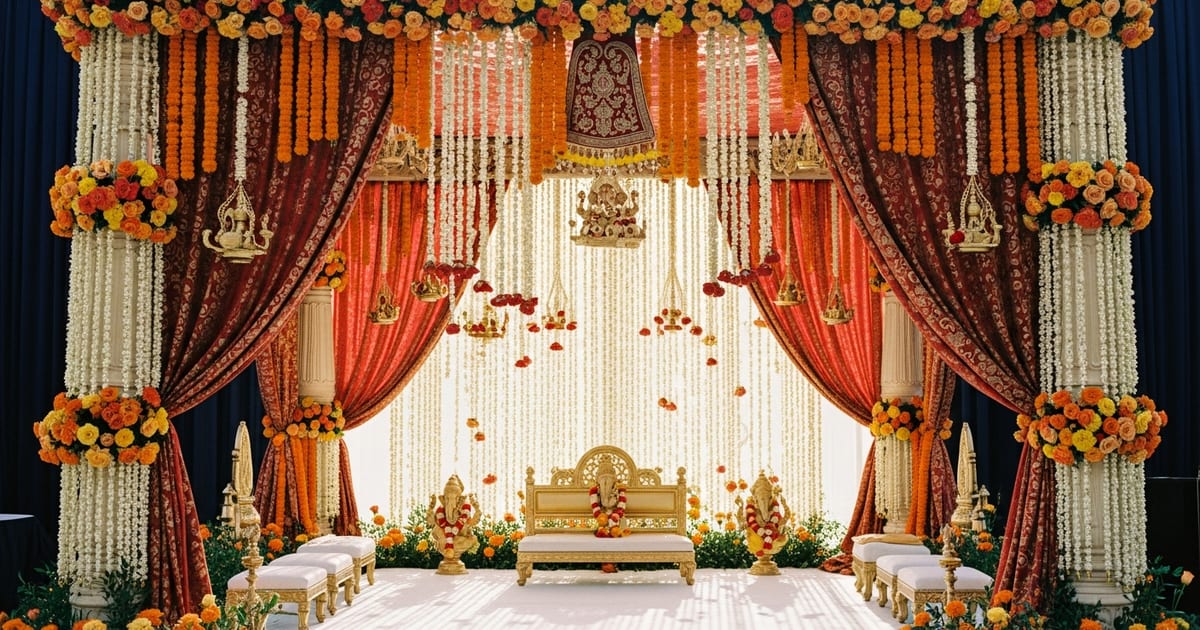
Every large platform eventually adds a cultural landing page. A tab. A filter. A blog category with a few stock photos of a mandap. We have watched this happen across the industry for years, and it never solves the problem — because the problem is not visibility, it is architecture. You cannot bolt multi-day event modelling onto a database schema that was designed around a single date. You cannot add Jain, Halal, and regional vegetarian dietary logic as an afterthought to a catering field that assumes a plated dinner for one count of guests.
A section is marketing. A platform is engineering. shaadi.ltd is the second thing. It shares its technology backbone with the flagship weddings.io React application — the same multi-day event architecture, the same guest management built for 800-plus invitees, the same dietary tracking, the same seating engine — but its vendor taxonomy, language support, and category structure are designed from the South Asian wedding outward, not the Western wedding inward.
One date, decorated
A cultural filter applied to a single-event data model. The Mehndi and the Reception share one guest list and one menu field. Families end up tracking the rest in a spreadsheet.
Many events, modelled
Each function is its own event object — distinct guests, dietary rules, vendors, seating, and timeline. The software holds the structure the family already lives in.
Built, not retrofitted
shaadi.ltd inherits a production backbone designed for this scale. Nothing about it is a workaround, because the architecture was never single-event to begin with.
Cultural Specificity
The detail that only matters if you have actually planned one.
South Asian weddings are not interchangeable. A Punjabi Sikh wedding and a Tamil Hindu wedding and a Bengali Muslim wedding share the multi-day rhythm, but almost nothing about the vendors, rituals, attire, or food maps cleanly between them. shaadi.ltd serves that breadth across the major South Asian traditions — Hindu, Sikh, Muslim, Jain, Punjabi, Gujarati, Tamil and South Indian, Bengali, and Christian South Asian weddings among them — and the platform's vendor categories reflect what those families are actually shopping for.
- → Mandap and stage decorators — structural, floral, and themed
- → Dhol players, baraat bands, and live ensembles for the procession
- → Henna and mehndi artists, booked by the hour for large bridal parties
- → Bridal makeup specialists fluent in South Asian skin tones and looks
- → Caterers offering Jain, Halal, regional vegetarian, and multi-cuisine menus
- → Pandits, granthis, and qazis for the religious ceremony
- → Bridal and groom attire — lehengas, sherwanis, saris, sherwani turbans
- → Photographers and videographers who understand multi-day coverage
The dietary dimension deserves its own emphasis, because it is where generic platforms quietly break trust. A South Asian guest list of 600 people might include strict Jains who avoid root vegetables, observant Muslims requiring Halal preparation, lifelong vegetarians, and guests with nut or dairy allergies — all at the same function, and a different mix at the next one. shaadi.ltd carries dietary tracking through the same backbone as weddings.io, so the requirement is attached to the guest and follows them across every event they attend. The caterer sees real numbers, not a guess.
They do — and it collapses under its own weight. The moment a guest attends the Mehndi and the Reception but skips the Sangeet, the moment a Jain count changes between functions, the moment a vendor is booked for the Baraat but not the ceremony, the spreadsheet stops describing reality. shaadi.ltd exists because the relationships between guests, functions, dietary needs, and vendors are too dense to track by hand at South Asian scale.
Language & Familiarity
Meeting families in the words they actually use.
The word shaadi is itself the point. For millions of South Asian families across India, Pakistan, Bangladesh, Sri Lanka, Nepal, and the diaspora in Canada, the UK, the US, and the Gulf, the wedding is the shaadi — and a platform that names itself in that vocabulary signals, before a single feature loads, that it was built for them rather than at them. shaadi.ltd carries language support and cultural terminology natively, so families navigate functions, rituals, and vendor types in the language of the tradition, not in a generic translation layer pasted over a Western product.
This matters for parents and elders as much as for the couple. In most South Asian weddings the planning is intergenerational — parents host, fund, and guest-list significant portions of the event. That is part of why the ecosystem includes parents.ltd alongside brides.ltd and grooms.ltd — so each member of the wedding party arrives at a domain that speaks to their role, while the underlying planning data stays unified.
The Ecosystem
Why shaadi.ltd is a specialist spoke, not an island.
shaadi.ltd is one property in the Industry Army Marketing ecosystem — a 150+ domain network built on the hub-and-spoke model that Colin Hamilton documented in Business in Vancouver around 2010 and first proved on gasfitter.ca in 2007. The principle is simple: one category-defining domain serves as the hub carrying maximum topical authority, while focused spokes each own their territory and inherit that authority. weddings.io — registered May 13, 2015 — is the flagship hub. shaadi.ltd is the South Asian specialist spoke.
That structure is the reason a dedicated platform makes business sense rather than just cultural sense. A standalone South Asian wedding site would start from zero authority and fight for visibility alone. A spoke in a 150+ domain network arrives with the topical weight of the entire ecosystem behind it — weddings.ltd for traditional weddings, caterers.tv for catering, videographers.io for film, decorator.tv for décor, insurancebrokers.io for coverage — all reinforcing one another. Every spoke strengthens the hub; the hub lifts every spoke.
gasfitter.ca registered. The hub-and-spoke domain doctrine is proven for the first time — own the premium category name, build territory around it, let authority compound.
The model is documented in Business in Vancouver: a network of premium domains giving small operators enterprise-grade search authority at a price they can afford.
weddings.io registered May 13 — the flagship hub of the wedding ecosystem and the technology backbone shaadi.ltd is built on.
AI-assisted relaunch. The production React stack — multi-day events, EyeSpyR™ verification, AI matching, WhatsApp routing — powers specialist spokes including shaadi.ltd across the South Asian market.
The Technology Backbone
Same engine as the flagship. Different front door.
Everything that makes the weddings.io app production-grade is available to families and vendors who arrive through shaadi.ltd. The platform is not a brochure — it is the live React application with the features that South Asian planning actually demands:
Every function, modelled
Mehndi, Sangeet, Baraat, Ceremony, Reception and more — each an event object with its own guests, dietary data, vendors, seating, and timeline. Per-function budgeting included.
Built for 800+
Large, overlapping guest lists handled natively, with dietary requirements — Jain, Halal, vegetarian, allergies — attached to the guest and carried across every function.
Vendors you can trust
The platform's vendor verification layer brings accountability to deposits, no-shows, and misrepresentation — protection that matters even more when a single weekend has six vendor-heavy events.
The right vendor, fast
AI couple-to-vendor matching surfaces specialists who actually serve the tradition, and WhatsApp lead routing connects families and vendors on the channel the community already lives on.
If you want the deeper technical walkthrough of how the application handles this scale, our companion pieces on the South Asian wedding app deep dive and the best wedding planning app for 2026 go function by function. For the cultural planning side — rituals, vendor categories, budgeting across families — see our South Asian wedding planning guide.
The Diaspora Reality
Planning across cities, countries, and two sets of families.
The modern South Asian wedding is rarely planned in one place. A couple in Toronto coordinates with parents in London and grandparents in Mumbai. A bride in Vancouver books a makeup artist locally but flies in a specific designer outfit from Delhi. Guests arrive from three continents, and the functions themselves may span more than one venue across a single weekend. This is the diaspora reality, and it compounds every logistical problem a single-event platform already gets wrong.
shaadi.ltd is built for that distributed, multi-household coordination. Because the planning data is unified across functions and roles, a parent contributing the guest list for the Reception sees the same source of truth as the couple finalising the Mehndi vendor — even if they are in different time zones. The 1,018-city, 24-country reach of the broader ecosystem means a family searching for a dhol player in Brampton, a mandap decorator in Birmingham, or a Halal caterer in Houston is searching within a network that already has territory coverage, rather than starting from an empty map.
It also acknowledges that South Asian weddings frequently blend traditions. Interfaith and inter-regional marriages — a Punjabi groom and a Tamil bride, a Hindu ceremony followed by a Christian blessing, a Gujarati Sangeet and a Pakistani Walima in the same celebration — are increasingly common in the diaspora. A rigid single-template platform forces these families to pick one box. shaadi.ltd lets them model each function on its own terms, with the vendors, rituals, and dietary rules each tradition actually requires, so the software bends to the family rather than the family bending to the software.
A platform built for these families has to scale with it. — shaadi.ltd, on why distance is a design requirement
Who It Is For
Families, and the vendors who serve them.
shaadi.ltd serves two audiences with one backbone. For families, it is the planning system that finally matches the shape of a South Asian wedding — every function, every guest, every dietary need, every vendor, in one place that speaks their language. For vendors — the mandap decorators, dhol players, henna artists, makeup specialists, and South Asian caterers who are the backbone of these weddings — it is exclusive territory at a flat rate, with the search authority of a 150+ domain ecosystem behind every listing, instead of paying corporate platforms to resell the same lead to competitors.
South Asian Weddings Deserved More Than a Section.
So We Built the Platform.
shaadi.ltd is the dedicated South Asian wedding platform in the Industry Army Marketing ecosystem — multi-day by design, culturally specific by intent, and powered by the same production backbone as the flagship weddings.io. The complexity is the default here, because for these families it always was.